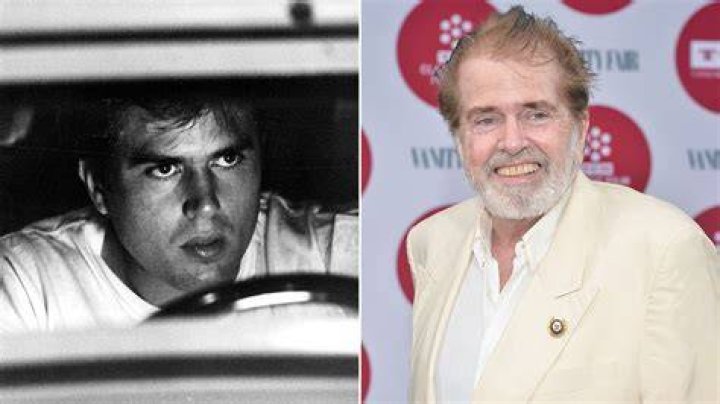
Robert LaGuardia, in his 1988 biography "Monty," claimed that director John Huston, who had paternalistic feelings towards Clift after directing the alcoholic and emotionally troubled actor in The Misfits (1961) (1961), became sadistic towards him during the troubled Freud (1962) (1962) shoot. Basing his charges on interviews with co-star Susannah York, LaGuardia claimed that Huston kept asking Clift about the Freudian concept of "represssion," obviously alluding to Clift's repressed homosexuality. Apparently, Huston himself could not broach the idea that Monty was gay in his own mind, but subconsciously, he reacted to Monty's homosexuality quite negatively. (Marilyn Monroe had admonished Monty not to work with Huston again, finding him a sadist on the "Misfits" set. Her ex-husband Arthur Miller, on the other hand, did not fault Huston in his autobiography "Timebends," but instead, marveled about how he kept his cool during the "Misfits" shoot, which was also troubled due to Marilyn Monroe's mental illness and frequent absences from the set.) Monty's biographer thought that Huston still had paternalistic feelings towards the actor, but was subconsciously appalled at his surrogate son's homosexuality; thus, he began to torture him on the set by insisting on unnecessary retakes and that he perform his own stunts, such as climbing up a rope. Despite Monty's many problems, he always proved a trouper, and gave as much as he could, including diving into a river in his last film, L'espion (1966) (1966).
3
In the James Kirkwood novel "Hit Me With A Rainbow", early on the lead character is told that he resembles Montgomery Clift. He reflects that this has been happening often and surmises is it due to Clift's recent death.
He was a close friend of Elizabeth Taylor, although he greatly disliked her husband Richard Burton, and the feeling was mutual. Clift once said, "Richard Burton doesn't act, he just recites.".
8
Voted for Republican Thomas E. Dewey in the 1948 presidential election, but later actively campaigned for Democratic candidate Adlai Stevenson in the 1952 presidential election - much to the annoyance of his father.
9
Son of William Brooks Clift and wife Ethel Anderson Fogg. Ethel is believed by some biographers to have been an illegitimate daughter of Woodbury Blair by Maria Latham Anderson. Woodbury Blair was the son of Montgomery Blair, after whom his great-grandson received his middle name, and wife Mary Elizabeth Woodbury, daughter of Levi Woodbury (1789-1851), US Supreme Court, and wife Elizabeth Wendell Clapp. Montgomery's ancestry was English, as well as more distant Scottish, Dutch, German, and French.
10
Became good friends with Dean Martin while filming The Young Lions (1958), and Clift helped the singer, who was best known at that time as a light comedian, with rehearsing his heavy dramatic scenes. In later years, as Clift was ostracized by the Hollywood social set for his substance abuses and mental instability, Martin stuck by the troubled actor and often brought him along as his guest to parties.
A sometime guest of Broadway legends Alfred Lunt and Lynn Fontanne at their rural retreat Ten Chimneys in Genesee Depot, Wisconsin.
15
At his near-fatal car accident in 1956, Rock Hudson, Michael Wilding and Kevin McCarthy formed a protective shield to prevent Clift's photo from being taken by photographers as he was carried from the wreck to the ambulance.
16
Hollywood folklore has it that his ghost haunts the Hollywood Roosevelt Hotel. The actor had stayed there while filming From Here to Eternity (1953), even though all filming locations for "From Here to Eternity" were in Hawaii.
His father was a violent, abusive, ultra-conservative bigot and did not get along with his son. As an actor, whenever Clift was playing characters snapping as they went up against ignorance or brutality, Clift was said to have acted with his father in mind as an antagonist.
19
Spoke fluent French, Italian and German.
20
Suffered from dysentery and colitis for most of his adult life.
21
Marlon Brando, who calls him a "friend" in his autobiography, says that Clift was a tormented soul addicted to alcohol and chloral hydrate, a depressant and sedative which he drank. On the set of The Young Lions (1958), he warned Clift that he was destroying himself like Brando's own alcoholic mother had. For his part, Clift was always supportive of Brando as an actor, even when his career began faltering after Mutiny on the Bounty (1962).
22
On the set of The Young Lions (1958), Marlon Brando insisted on doing his own stunt fall after being "shot" by co-stars Clift and Dean Martin and wound up dislocating his shoulder. Clift, seeing that Brando was in pain, offered him a swig from the thermos jug he carried with him at all times. The combination of vodka and prescription drugs in the thermos helped Brando through the ordeal.
23
In Robert Laguardia's "Monty" (1977), the first published biography, Laguardia tells of how Clift was discomfited when he initially met co-star Burt Lancaster on the set of From Here to Eternity (1953). Lancaster was in awe of Monty and was so nervous, he actually shook during their first scene (as also mentioned in Lancaster's biography).
24
Was Elizabeth Taylor's choice to play her husband, the closeted homosexual Major Weldon Penderton, in Reflections in a Golden Eye (1967). He died before the film began shooting and was replaced by Marlon Brando, who at one time was considered his only rival as an attractive leading man who was also a great actor.
25
He was voted the 60th Greatest Movie Star of all time by Entertainment Weekly.
He had so many health problems on the set of Freud (1962) that Universal sued him for the cost of the film's production delays. During the trial, the film opened and was such a huge hit that Clift's lawyers brought up the point that the film was doing well because of Clift's involvement. Clift won a lucrative settlement.
29
Interred at Quaker Cemetery, Brooklyn, New York, USA.
30
The release of Red River (1948) made him an overnight sensation and instant star. He embodied a new type of man on screen, the beautiful, sensual and vulnerable man that seemed to appeal to women and men alike. After A Place in the Sun (1951) came out he was Hollywood's hottest male star and adored by millions. He looked incredible and was a fine actor, a rare combination. His only rival in this regard during the next few years was Marlon Brando, whose career turned out to be more stable and successful in the end. Clift's mental problems prevented him from staying at the top, as his drinking and drug problem began to affect his acting and bankability. The loss of his dashing looks in a well publicized road accident during the filming of Raintree County (1957) didn't help, either. What followed could be described as the longest suicide in show-business history.